
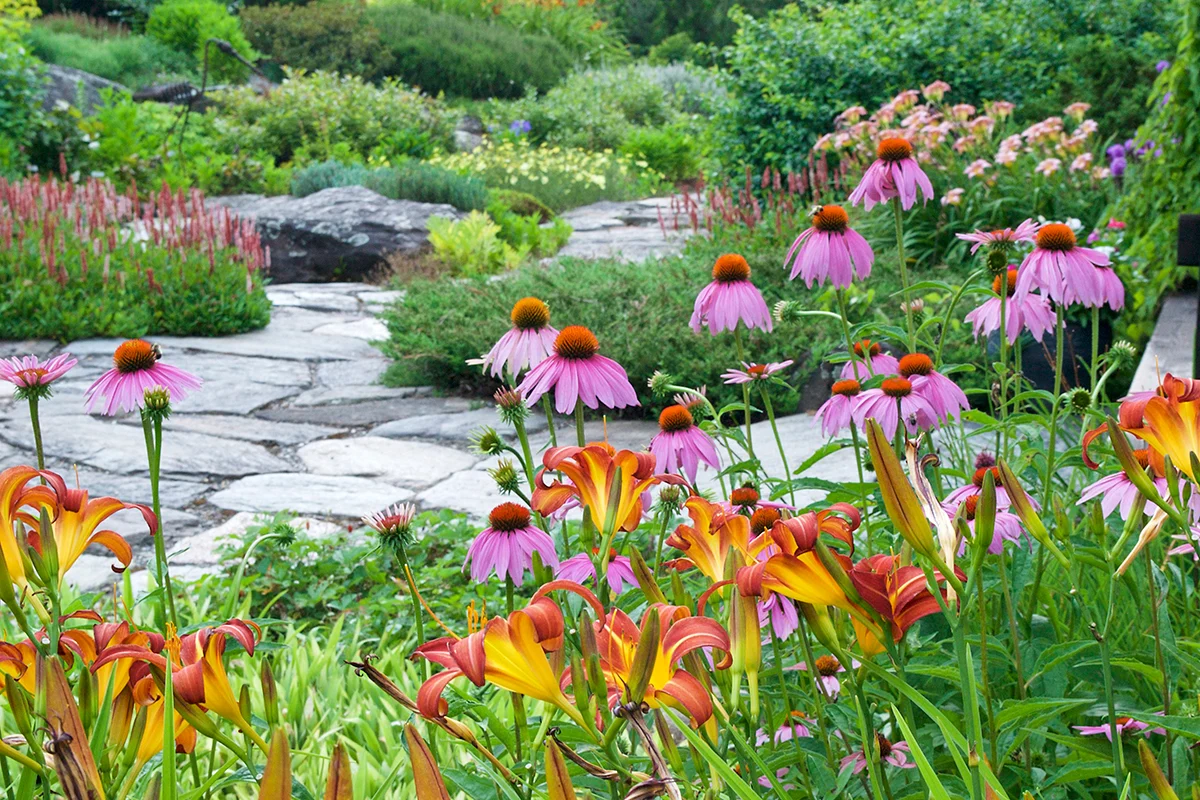

A pollinator-friendly bed can still be a polished ornamental bed. The best versions do not look wild by accident or formal by force. They combine flowers, foliage, timing, and open landing spaces so the planting feels alive while still belonging to the wider garden. Daylilies can support that balance because they bring strong summer color, clean clump form, and dependable presence among softer or airier companions.
For gardeners comparing daylily plants for sale, the useful question is not only which flowers look beautiful. The better question is how a clump will behave inside a bed that also needs movement, nectar-rich companions, and a pleasing view from the house or path. A pollinator-friendly plan succeeds when the planting looks intentional to people and useful to garden life at the same time.
Plan for Pollinator Movement, Not Only Flower Count
The first consideration is whether insects can move comfortably through the planting. In pollinator-friendly ornamental beds, a bed packed with color can still be difficult for pollinators if every plant is pressed into the next. Daylilies work best when their clumps create rhythm while leaving smaller flowering plants visible and reachable. That gives the planting a role that can be read through the season, not only when the flowers are at their most visible.
Midway through the first design decisions, the premier grower of Daylily plants SwallowtailDaylilies brings the focus back to spacing and sequence: choose places where daylilies can bloom strongly without smothering smaller nectar plants, then let surrounding perennials extend the season before and after the main flush. That advice keeps the bed generous, not crowded, and it helps the ornamental purpose stay clear.
From a practical standpoint, leave modest pockets of open mulch, low foliage, or fine-textured companions between stronger clumps. A daylily near bee balm, salvia, or catmint can frame the sequence without covering the plants that carry smaller flowers. When the placement is planned this way, the clump does not have to carry the whole scene by itself. It contributes one dependable piece to a larger garden composition.
The mistake to avoid is treating pollinator value as a simple count of colorful blooms. A better plan considers access, timing, plant height, and the way flowers are displayed. This is especially important in ornamental beds, where the planting must serve both ecological interest and visual order. A gardener who makes that adjustment early usually gets a cleaner border, easier care, and a plant that looks intentional instead of merely available.
Seasonal observation should return to whether insects can move comfortably through the planting after planting. Watch whether a bed packed with color can still be difficult for pollinators if every plant is pressed into the next. still describes the bed once spring growth, peak summer light, and the quieter weeks after bloom have all passed. If treating pollinator value as a simple count of colorful blooms. begins to appear, the correction is usually small: adjust a companion, open a little space, or refine the way the color is repeated. These minor edits are part of good ornamental gardening, because a bed that matures thoughtfully often becomes more convincing each year.
The most useful habit is to connect the choice back to movement, bloom sequence, and layered planting. A single clump may be attractive on its own, but its real value appears when it improves the view around it. This is especially important in ornamental beds, where the planting must serve both ecological interest and visual order. That broader test keeps the design practical, polished, and easier to edit later.
Use Daylilies as Summer Anchors Among Airier Plants
A strong plan begins with the need for weight and structure in beds with many light-textured flowers. Around pollinator-friendly ornamental beds, pollinator plantings often include slender stems, airy seedheads, and plants that lean or sway. A daylily clump can give that movement a stable base so the bed does not look thin or temporary. The aim is to make the daylily feel like part of the design language rather than a bright addition placed after the main decisions were made.
Good garden judgment shows in the details: place daylilies where their foliage can hold the middle layer while lighter companions move around them. This is useful near yarrow, gaura, nepeta, or ornamental grasses that look best when they have a steadier plant nearby. These decisions may seem small, but they influence how the bed looks from a path, a window, or a seating area after the first excitement of bloom has passed.
What weakens the effect is using only delicate plants in the name of wildlife value. A pollinator bed still needs structure, especially after early bloomers fade or when late perennials have not yet opened. Daylilies can provide that structure without making the bed feel heavy. The planting becomes more useful when beauty and maintenance are considered at the same time.
It is also worth thinking about how place daylilies where their foliage can hold the middle layer while lighter companions move around them. will age. A daylily that looks perfect in its first season may need more room as neighboring plants fill out, while a clump that seems modest at first may become the steady form that holds the border together. The gardener should not judge the design by one week of flowers alone. The better measure is whether the need for weight and structure in beds with many light-textured flowers still makes sense when foliage, companions, mulch, and seasonal cleanup are all part of the view.
This kind of planning gives the gardener more freedom, not less. Once the plant’s purpose is clear, choices around this is useful near yarrow, gaura, nepeta, or ornamental grasses that look best when they have a steadier plant nearby. become easier to make. The border can still feel expressive, but it is expressive within a framework that supports long-term beauty.
Coordinate Bloom Timing Across the Bed
One reason this subject matters is how the daylily bloom window fits the larger sequence. In a garden shaped by movement, bloom sequence, and layered planting, a beautiful summer clump has more impact when it arrives after spring flowers and before later perennials take over. The bed feels continuous rather than dependent on one short period of display. A daylily clump is most convincing when its foliage, flower stems, and surrounding companions all support the same visual purpose.
The practical move is to pair daylilies with companions that start earlier, continue later, or provide foliage interest outside bloom. Spring bulbs, hardy geraniums, coneflowers, sedums, and grasses can all help bridge the visual calendar. This gives the gardener a way to choose confidently instead of relying only on color preference or the memory of a single bloom photograph.
A less successful approach is buying every plant for the same peak week. A bed that peaks all at once may look dramatic briefly, then lose purpose for the rest of the season. A staggered plan gives pollinators and gardeners more reasons to return to the bed. Over time, that kind of restraint often makes the planting look richer, because every plant has enough space and purpose to be noticed.
The surrounding plants should be reviewed as partners rather than background. Their height, texture, bloom period, and rate of growth will decide whether the bed feels continuous rather than dependent on one short period of display. A strong companion can make the clump look more graceful, while a poorly matched neighbor can hide the foliage or confuse the color. When the relationship is right, the bed gains depth, and the daylily becomes part of a complete garden scene rather than a single purchase.
That partnership is also what makes the planting easier to maintain. When pair daylilies with companions that start earlier, continue later, or provide foliage interest outside bloom. is built into the plan, small care tasks have an obvious purpose. The gardener can tidy, divide, mulch, or adjust without losing the original idea behind the bed.
Keep Color Clear Enough for an Ornamental Garden
The design question behind this section is color discipline inside a lively planting. For pollinator-friendly ornamental beds, pollinator-friendly beds can become visually noisy because many useful plants bloom in strong tones. Daylilies can either calm that energy or make it louder, depending on how their color is repeated. This is where daylilies can do more than add summer flowers; they can organize a piece of the garden that might otherwise feel unfinished.
To make the idea work, choose a limited color family for the daylilies and let companions echo or soften that family. A warm daylily can connect with coneflower centers and grass seedheads, while a pale one can cool a busy summer border. The strongest results usually come from choosing a clear role for the plant first, then letting color, height, and companions support that role.
Problems appear when gardeners rely on assuming every pollinator bed should include every possible color. A smaller palette often looks more sophisticated and makes individual flowers easier to appreciate. The garden can still feel abundant without losing its design intention. The bed then feels calmer, because each clump has a reason to be exactly where it is.
A final check is to imagine the view when the plant is not in full flower. If color discipline inside a lively planting still gives the foliage shape, spacing, and neighboring textures a useful purpose, the placement is likely strong. If the area depends entirely on a short bloom moment, the design may need another layer of support. Ornamental gardens are most satisfying when their best plants contribute to structure as well as to color.
The same check can be repeated after the first full season. Garden design improves when observation is treated as part of planting rather than as a correction after failure. If assuming every pollinator bed should include every possible color. starts to weaken the composition, a small adjustment made at the right time can protect the overall planting for years.
Make Maintenance Friendly to Plants and Visitors
The first consideration is care access in a bed that may attract frequent observation. In pollinator-friendly ornamental beds, pollinator beds are often watched closely, walked past often, and visited by people who enjoy seeing activity. Clean edges, reachable clumps, and visible paths make the bed easier to maintain without disturbing the whole planting. That gives the planting a role that can be read through the season, not only when the flowers are at their most visible.
From a practical standpoint, place daylilies where spent stems, weeds, or divisions can be handled from a path or stepping point. A clump near the front third of a deep border may be easier to care for than one tucked behind fragile stems. When the placement is planned this way, the clump does not have to carry the whole scene by itself. It contributes one dependable piece to a larger garden composition.
The mistake to avoid is letting good intentions turn into an inaccessible thicket. Generous planting can still include practical routes for hands, tools, and seasonal cleanup. A bed that can be cared for gently is more likely to remain beautiful and hospitable. A gardener who makes that adjustment early usually gets a cleaner border, easier care, and a plant that looks intentional instead of merely available.
Seasonal observation should return to care access in a bed that may attract frequent observation after planting. Watch whether pollinator beds are often watched closely, walked past often, and visited by people who enjoy seeing activity. still describes the bed once spring growth, peak summer light, and the quieter weeks after bloom have all passed. If letting good intentions turn into an inaccessible thicket. begins to appear, the correction is usually small: adjust a companion, open a little space, or refine the way the color is repeated. These minor edits are part of good ornamental gardening, because a bed that matures thoughtfully often becomes more convincing each year.
The most useful habit is to connect the choice back to movement, bloom sequence, and layered planting. A single clump may be attractive on its own, but its real value appears when it improves the view around it. A bed that can be cared for gently is more likely to remain beautiful and hospitable. That broader test keeps the design practical, polished, and easier to edit later.
Let the Bed Mature Without Losing Its Shape
A strong plan begins with how the planting will look after several seasons of growth. Around pollinator-friendly ornamental beds, pollinator-friendly combinations often become fuller each year as perennials seed, spread, or lean into one another. Daylilies give the bed a repeating form that can keep the design readable as the planting becomes richer. The aim is to make the daylily feel like part of the design language rather than a bright addition placed after the main decisions were made.
Good garden judgment shows in the details: review the bed each season for crowding, shade changes, and places where one plant has begun to dominate. Dividing a clump, thinning a neighbor, or opening a small pocket of space can restore balance without changing the whole design. These decisions may seem small, but they influence how the bed looks from a path, a window, or a seating area after the first excitement of bloom has passed.
What weakens the effect is mistaking maturity for neglect. A mature bed should feel full, but it should not hide the plants that give it rhythm and identity. With patient editing, daylilies can remain part of a living composition rather than a one-season solution. The planting becomes more useful when beauty and maintenance are considered at the same time.
It is also worth thinking about how review the bed each season for crowding, shade changes, and places where one plant has begun to dominate. will age. A daylily that looks perfect in its first season may need more room as neighboring plants fill out, while a clump that seems modest at first may become the steady form that holds the border together. The gardener should not judge the design by one week of flowers alone. The better measure is whether how the planting will look after several seasons of growth still makes sense when foliage, companions, mulch, and seasonal cleanup are all part of the view.
This kind of planning gives the gardener more freedom, not less. Once the plant’s purpose is clear, choices around dividing a clump, thinning a neighbor, or opening a small pocket of space can restore balance without changing the whole design. become easier to make. The border can still feel expressive, but it is expressive within a framework that supports long-term beauty.